

OTHM Level 4 Diploma in Information Technology
The objective of the OTHM Level 4 Diploma in Information Technology is to provide a career path for learners who wish to develop a broad base of knowledge and skills that will enable them to work in a variety of roles in the IT industry.
The programme will focus on topics such as cyber security, computer programming, web and mobile applications, computer and network technology, systems analysis and design and managing digital information.
OTHM Level 4 Diploma in Information Technology
Entry requirements These qualifications are designed for learners who are typically aged 18 and above. The entry profile for learners is likely to include at least one of the following: Relevant Level 3 Diploma or equivalent qualification GCE Advanced level in 2 subjects or equivalent qualification Mature learners (over 21) with relevant management experience (learners must check with the delivery centre regarding this experience prior to registering for the programme) English requirements:If a learner is not from a majority English-speaking country, they must provide evidence of English language competency. For more information visit the English Language Expectations page on the OTHM website. Equivalences OTHM qualifications at RQF Level 4 represent practical knowledge, skills, capabilities and competences that are assessed in academic terms as being equivalent to Higher National Certificates (HNC) and Year 1 of a three-year UK Bachelor's degree programme.
Assessment and verification
All units within this qualification are internally assessed by the centre and externally verified by OTHM. The qualifications are criterion referenced, based on the achievement of all the specified learning outcomes.
To achieve a ‘pass’ for a unit, learners must provide evidence to demonstrate that they have fulfilled all the learning outcomes and meet the standards specified by all assessment criteria. Judgement that the learners have successfully fulfilled the assessment criteria is made by the Assessor.
The Assessor should provide an audit trail showing how the judgement of the learners’ overall achievement has been arrived at.
- Exam: ASSESSMENT
- Method:Classroom/ONLINE
- download course brochure
- apply form
- take this course
description
Qualification structure
The OTHM Level 4 Diploma in Information Technology consists of 6 mandatory units for a combined total of 120 credits, 1200 hours Total Qualification Time (TQT) and 480 Guided Learning Hours (GLH) for the completed qualification.
Mandatory units
- Cyber Security (20 credits)
- Principles of Computer Programming (20 credits)
- Systems Analysis and Design (20 credits)
- Web and Mobile Applications (20 credits)
- Computer and Network Technology (20 credits)
- Managing Digital Information (20 credits)
Duration and delivery
The qualification is designed to be delivered over one academic year for full-time study, but it is also flexible in its delivery in order to accommodate part-time and distance learning.
The qualification is delivered face-to-face, through lectures, tutorials, seminars, distance, online by approved centres only.
Progression
Successful completion of the OTHM Level 4 Diploma in Information Technology provides learners the opportunity for a wide range of academic progressions including the OTHM Level 5 Diploma in Information Technology.
As this qualification is approved and regulated by Ofqual (Office of the Qualifications and Examinations Regulation), learners are eligible to gain direct entry into the second year of a three-year UK Bachelor’s degree.
Benefits of Training with us
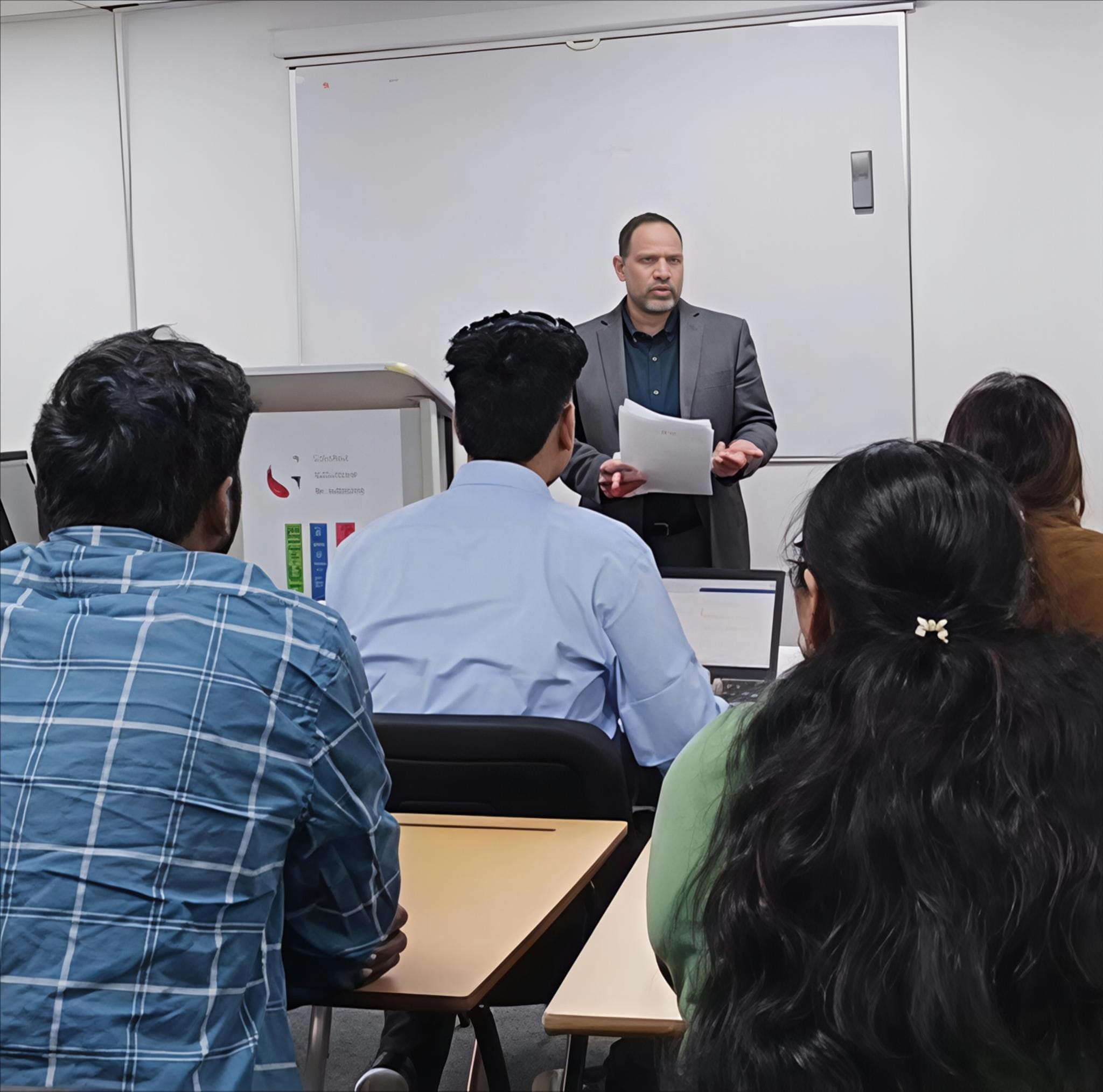
- Expert Trainers: Highly experienced instructors from the industry.
- Complete Access: Lab access and materials provided throughout the course.
- Ongoing Support: Continuous guidance even after the course completion.
- Transparent Costs: One price covers everything you need to succeed.
Flexible Payment Options
Avail our 0% interest monthly installment plans, enabling you to evenly distribute the cost of your investment over manageable monthly payments.”