Fundamentals of Aeronautical Engineering & Aviation Career Pathways
Discover the fundamentals of aeronautical engineering and explore exciting aviation career pathways. Gain industry knowledge and prepare for future opportunities.
Master the Skies: 12-Week Certificate in Aeronautical Engineering & Aviation Career Pathways
Launch Your Career in Aviation
Take the first step towards an exciting aviation career with our 12-Week Certificate in Aeronautical Engineering & Aviation Career Pathways. This 96-hour programme is designed for aspiring pilots, future aircraft maintenance engineers, career changers, and aviation enthusiasts looking to explore opportunities in the aviation industry.
Whether your ambition is to become a commercial pilot, an aircraft maintenance engineer, or progress to university study in aeronautical engineering, this course provides the knowledge, practical experience, and career guidance to help you choose the right pathway.
- download course brochure
- apply form
- take this course
- Category: Foundational
- Exam duration 90 minutes
- Assessment:: Final portfolio & presentation
- prerequisites : None
- Duration: 12 Weeks
- Cost:
- Date:Please inquire about the next session.
- take this course
- Who Should Attend:
This programme is ideal for:
- Aspiring pilots who want to understand the fundamentals of flight and aviation operations.
- Students interested in aircraft maintenance, aeronautical engineering, or aerospace careers.
- School and college leavers exploring future study and career pathways in aviation.
- Career changers looking to enter the aviation industry with no prior experience.
- STEM learners who enjoy science, technology, engineering, and mathematics.
- Aviation enthusiasts who want practical insight into how aircraft work and how the industry operates.
Course Overview
The Fundamentals of Aeronautical Engineering & Aviation Career Pathways is a 12-week, 96-hour introductory programme designed to provide a comprehensive foundation in aviation and aerospace engineering. Through a blend of classroom teaching, practical laboratory sessions, flight simulator training, wind tunnel experiments, industry visits, and interactive workshops, you’ll gain first-hand insight into how aircraft are designed, operated, and maintained.
The course also provides clear guidance on aviation career routes, including commercial pilot training, aircraft maintenance engineering (EASA Part 66), and progression to higher education in aeronautical and aerospace engineering. No previous engineering or aviation experience is required.
Phase 1: Aerodynamics & Flight Principles (Weeks 1–3)
- Week 1: Fundamentals of Fluid Flow
- Subsonic fluid flow theory, mechanisms of lift (Coanda effect to circulation), and drag definitions.
- Practical: Introduction to the wind tunnel; measuring boundary layer behaviour.
- Week 2: Aerodynamic Optimization
- Aerofoil design, high-lift devices, wings, spoilers, fairings, and downforce definitions.
- Practical: Wind tunnel testing of different aerofoil shapes to plot lift-to-drag ratios.
- Week 3: Aircraft Structures & Flight Controls
- Basic aircraft structural components and load paths.
- Primary vs. secondary flying controls and aerodynamic control devices.
- Practical: Flight simulator orientation; mapping control surface inputs to aircraft attitudes.
Phase 2: Aircraft Subsystems & Powerplants (Weeks 4–6)
- Week 4: Propulsion Systems
- Construction, design features, and operating principles of gas turbine engines. Introduction to rocket propulsion.
- Practical: Flight simulator propulsion management; analysing engine parameters across varied thrust settings.
- Week 5: Electrical & Fuel Systems
- Aircraft AC/DC electrical distribution networks, generation, and aircraft battery storage. Propulsion-matched fuel feed and transfer systems.
- Practical: Group system-mapping exercise; diagnosing a fuel leak or electrical bus failure.
- Week 6: Environmental Control & Emergency Systems
- Cabin pressure and temperature control systems (Pneumatics/Bleed air). Fire detection, protection, and emergency undercarriage systems.
- Practical: Group system-mapping exercise; emergency descent protocols in the flight operation.
Phase 3: Avionics, Instrumentation & Digitization (Weeks 7–8)
- Week 7: The Modern Cockpit & Sensors
- Glass cockpit architectures, primary flight displays (PFDs), and standard instruments. Pitot-static systems and instrumentation sensors.
- Practical: Flight instrument calibration and interpretation under instrument flight rules (IFR) simulation.
- Week 8: Avionic Subsystems & Autopilot
- Introduction to communications, navigation systems, radar, and automatic flight control systems (Autopilot).
- Practical: Programming automated flight paths and managing system coupling in the real navigation environment.
Phase 4: Safety, Regulations & Human Factors (Weeks 9–10)
- Week 9: International Regulatory Frameworks & SMS
- Role of international standards (Certification Specifications [CS], ISO, FAA, CAA, EASA). Core principles of Safety Management Systems (SMS).
- Practical: Drafting an initial hazard identification and risk mitigation matrix for an airport operation.
- Week 10: Accident Investigation & Human Factors
- Aircraft accident investigation methodologies. Human factors within aviation (physiology, fatigue, communication errors, and psychology).
- Practical: Comprehensive case study analysis of iconic aviation incidents (e.g., design failures vs. human error).
Phase 5: Future Flight & Career Pathway Execution (Weeks 11–12)
- Week 11: Sustainable Aviation & Future Concepts
- Researching future aircraft concepts, including hybrid, fully electric, and hydrogen fuel cell propulsion systems.
- Practical: Designing a conceptual zero-emission pleasure aircraft for 2–6 passengers.
- Week 12: Career Pathway Mapping & Portfolio Presentation
- Deep dive into the specific requirements for: Pilot training (ATPL), EASA Part 66 B1 (Mechanical), EASA Part 66 B2 (Avionics), and BEng/BSc Academic paths.
- Practical: Final portfolio presentation, career action-plan review, and professional mock interviews.
Embark on an exciting journey into aviation with the Fundamentals of Aeronautical Engineering & Aviation Career Pathways course. Gain a recognised certificate, practical hands-on experience, and the knowledge needed to confidently pursue careers in pilot training, aircraft maintenance engineering, or higher education in aeronautical engineering.
Career Advancement:
Upon successful completion, learners will have a clear understanding of the aviation industry’s career pathways and be well prepared to pursue further study or professional training, including:
- Commercial Pilot Training (ATPL)
- EASA Part 66 B1 Aircraft Maintenance Engineering
- EASA Part 66 B2 Avionics Engineering
- BEng/BSc degrees in Aeronautical or Aerospace Engineering
- Entry-level roles in airline operations, airport services, aviation management, and technical support
The course also develops industry knowledge, safety awareness, problem-solving skills, and an understanding of emerging aviation technologies, making learners more competitive for future opportunities.
Industry Recognition:
- Provide training that is valued by employers, ensuring that certified individuals are recognized and sought after in the competitive job market.
Delivery Method:
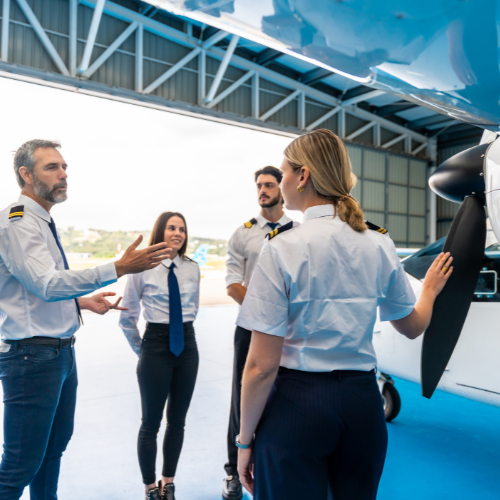
This course is delivered through a blended learning approach that combines theory with practical experience.
- Duration: 12 Weeks
- Study Hours: 96 Hours
- Delivery: Face-to-face lectures, practical laboratory sessions, and group activities
- Practical Training Includes:
- Flight simulator sessions
- Wind tunnel aerodynamics testing
- Engineering laboratory activities
- Industry site visits
- Case studies and group projects
- Continuous quizzes and formative feedback
Assessment: Learners will complete a final professional portfolio presentation, supported by a personalised career action plan and a mock interview, allowing them to demonstrate their knowledge, practical skills, and career readiness.
Certification:
Learners who successfully complete the programme will receive a Certificate in Fundamentals of Aeronautical Engineering & Aviation Career Pathways.
This certificate demonstrates foundational knowledge of aeronautical engineering, aircraft systems, aviation safety, and career pathways. It also provides an excellent platform for progression into pilot training, EASA Part 66 aircraft maintenance programmes, higher education, or further professional development within the global aviation industry.
Launch Your Aviation Career Today
Turn your passion for aviation into a future profession. Enrol now and begin your journey towards Aeronautical Engineering, Aircraft Maintenance, Pilot Training, and exciting careers across the aviation industry.
Apply Now
Start Learning Your Favorite Topics Today
start your free trial now
This course is designed to prepare participants for the AWS Certified Cloud Practitioner exam, covering essential AWS services, concepts, and best practices for those with a non-technical or foundational technical background..